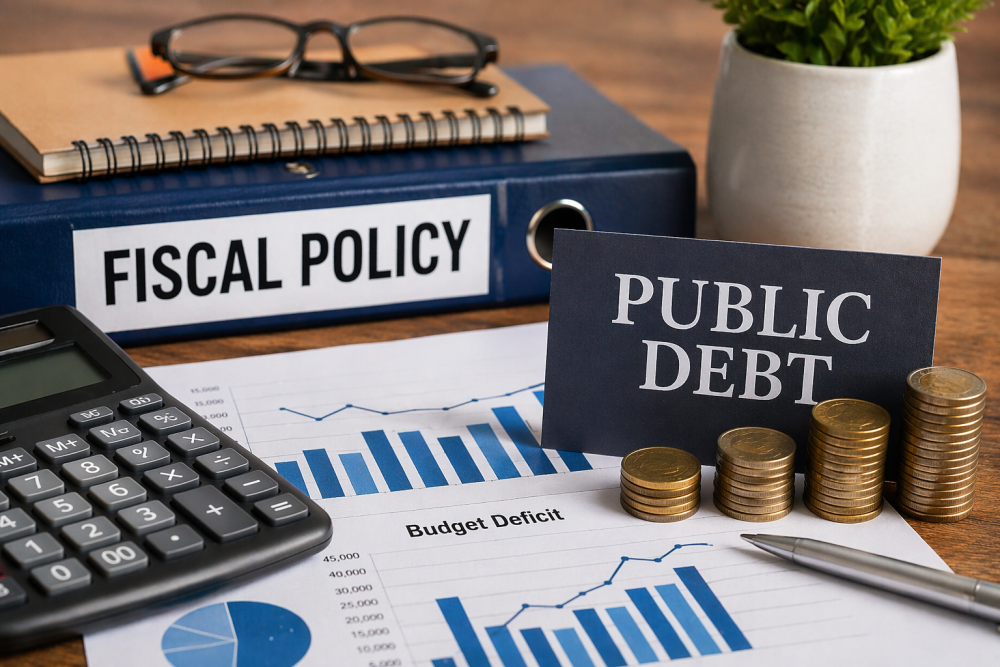
Introduction: Understanding Public Debt and Fiscal Policy
Public debt and fiscal policy are central pillars of modern economics. Governments around the world rely on borrowing and spending strategies to manage economic growth, stabilize markets, and respond to crises. Institutions like the International Monetary Fund and the World Bank closely monitor national debt levels to ensure global financial stability.
As economies face inflation, recession risks, and global uncertainty, understanding public debt and fiscal policy is more important than ever.
What Is Public Debt?
Public debt, also known as government debt or national debt, refers to the total amount of money a government owes to creditors. This debt accumulates when a government runs a budget deficit, meaning it spends more than it collects in revenue.
Public debt can be divided into:
- Domestic debt (borrowed within the country)
- External debt (borrowed from foreign lenders)
What Is Fiscal Policy?
Fiscal policy refers to government decisions on taxation and spending to influence the economy. It is one of the main tools used to control economic growth and stability.
There are two main types:
1. Expansionary Fiscal Policy
- Increased government spending
- Lower taxes
- Used during economic slowdowns
2. Contractionary Fiscal Policy
- Reduced spending
- Higher taxes
- Used to control inflation
The Relationship Between Public Debt and Economic Growth
Public debt can both support and hinder economic growth.
Positive Effects
- Funds infrastructure and development projects
- Stimulates demand during recessions
- Supports job creation
Negative Effects
- High debt can lead to higher interest rates
- Risk of inflation if borrowing is excessive
- Increased burden on future generations
The key issue is debt sustainability, which determines whether a country can manage its debt without financial instability.
Risks of High Public Debt
1. Debt Crisis
Countries with excessive debt may struggle to repay loans, leading to economic crises.
2. Inflation Pressure
Governments may print money to repay debt, increasing inflation.
3. Reduced Investment
High government borrowing can crowd out private investment.
4. Loss of Investor Confidence
If investors lose trust, borrowing costs increase significantly.
Global Trends in Public Debt
In recent years, global public debt has increased due to:
- Economic crises
- Pandemic-related spending
- Rising energy costs
- Inflation control measures
Many developing countries are particularly vulnerable due to limited financial resources and high borrowing costs.
Fiscal Policy Strategies for Stability
Governments use several strategies to manage debt effectively:
- Improving tax systems to increase revenue
- Controlling public spending
- Encouraging economic growth
- Debt restructuring and refinancing
International organizations often provide guidance and financial support to countries facing debt challenges.
Public Debt in Developing Countries
In countries like Morocco, public debt plays a crucial role in financing infrastructure, education, and social programs. However, managing debt levels is essential to avoid long-term economic risks.
Conclusion: Balancing Debt and Growth
Public debt and fiscal policy are powerful tools for managing economies, but they must be used carefully. While borrowing can support growth and development, excessive debt can lead to serious financial problems.
The future of economic stability depends on maintaining a balance between government spending, taxation, and debt management. With effective fiscal strategies, countries can achieve sustainable growth while minimizing risks.